

An Arab-American Promotes Peace with Israel
On the morning of August 25 I was privileged to attend a presentation organized by Ottawa’s McDonald Laurier Institute (MLI), featuring Hussain Abdul Hussain. Hussain is the author of “The Arab Case for Israel”, published this past spring. The book is an account of his youth in Iraq and Lebanon, and how his curiosity about Israel overcame the indoctrination he received while growing up. Subsequently, that curiosity led him to the conclusion that Islamic extremism is a disaster for Muslim countries, and a threat to western countries.
He also came to understand that war with Israel is not in the interests of Lebanese or Palestinians or any of the Arab states. Trying to undo Israel’s achievements is a self-defeating policy. Instead, Arabs should be working to achieve peace and cooperation with the Jewish state. One reason for this is that in many ways Israel is succeeding where Arab states are failing. It is in the interests of Arab states to be friendly with Israel and to learn from Israel.
Mr. Hussain appeared in front of an invited audience in conversation with Casey Babb. Casey teaches at the Norman Paterson School of International Affairs in Ottawa. He is also a senior fellow and the Director of MLI’s Promised Land Project. The Promised Land project is an MLI initiative to fight back against the rising tide of antisemitism in Canada. As part of this initiative MLI has brought many important speakers to Ottawa. I’ve reported in the past on some of them, including Einat Wilf, Irwin Cotler, and Hillel Neuer. Hussain Abdul-Hussain is a worthy addition to this distinguished group.
Who is Hussain Abdul Hussain?
Mr. Hussain was introduced by Alan Kessel, a former Canadian diplomat and Senior Fellow at the Macdonald-Laurier Institute. Mr. Kessel has spoken frequently here in Ottawa about the case for Israel, and against the surge of antisemitism in Canada. He spoke at my Ottawa synagogue last winter.
Kessel began by placing the discussion of Islamic extremism in a broader historical and political context.
He stressed the importance of distinguishing between Islam as a faith and Islamist extremism as a political ideology. He noted that the discussion was not about Islam or Muslims as a group, pointing out that most Muslims do not support political violence or extremist ideology and that Muslims themselves have often been among the victims of Islamist extremism. The focus, rather, was on movements that have taken religious ideas and turned them into a political program, in some cases a program that is deeply intolerant, and that has sanctioned violence against those who stand in its way.
Kessel emphasized that Islamic extremism has a much longer history than the emergence of al-Qaeda or ISIS. It did not begin with those organizations, nor did it begin with the Hamas attack of October 7, 2023. He referred to the development of political Islam, the Muslim Brotherhood, the collapse of the Ottoman Empire, the rise and failure of Arab nationalism, the Iranian Revolution, the Soviet war in Afghanistan and the emergence of transnational jihadist movements. He also stressed that these ideas developed within particular political circumstances, including wars, authoritarian governments, foreign intervention, state failure and social and economic dislocation.
Kessel then turned to the Arab-Israeli conflict. He acknowledged that the conflict has long been understood in terms of territory, competing nationalisms, refugees, borders and the competing claims of two peoples. But he argued that there has also been an ideological rejection of Israel that, in some cases, goes well beyond disagreement over borders or Israeli government policy.
He stressed that supporting Palestinian national aspirations, criticizing Israeli governments or advocating Palestinian statehood are legitimate matters of political judgment. That, he said, is different from denying Israel’s right to exist or embracing an ideology that regards violence against Israeli or Jewish civilians as legitimate. October 7, he argued, brought that distinction into particularly sharp focus.
Kessel also addressed the implications for Western societies. He pointed to arguments over the boundary between legitimate political expression and the glorification of terrorism, the disturbing rise in antisemitism, and debates on university campuses and in the streets that can reveal deeper ideological divisions.
The challenge for democratic societies, he suggested, is to protect freedom of expression and tolerate legitimate dissent while remaining capable of recognizing movements that reject pluralism, equal rights and democratic principles. He argued that this is not simply a question of policing or intelligence. Security measures can deal with particular threats, but they cannot by themselves address the ideas that give those threats their energy and staying power.
Kessel concluded by asking what Western governments and societies have misunderstood, what has changed, and what should now be done to confront the ideological and security challenges posed by extremism while protecting the democratic values of open societies.
He then introduced Casey Babb, Director of MLI’s Promised Land Project, and Hussain Abdul-Hussain, author of The Arab Case for Israel and a Research Fellow at the Foundation for Defense of Democracies.”
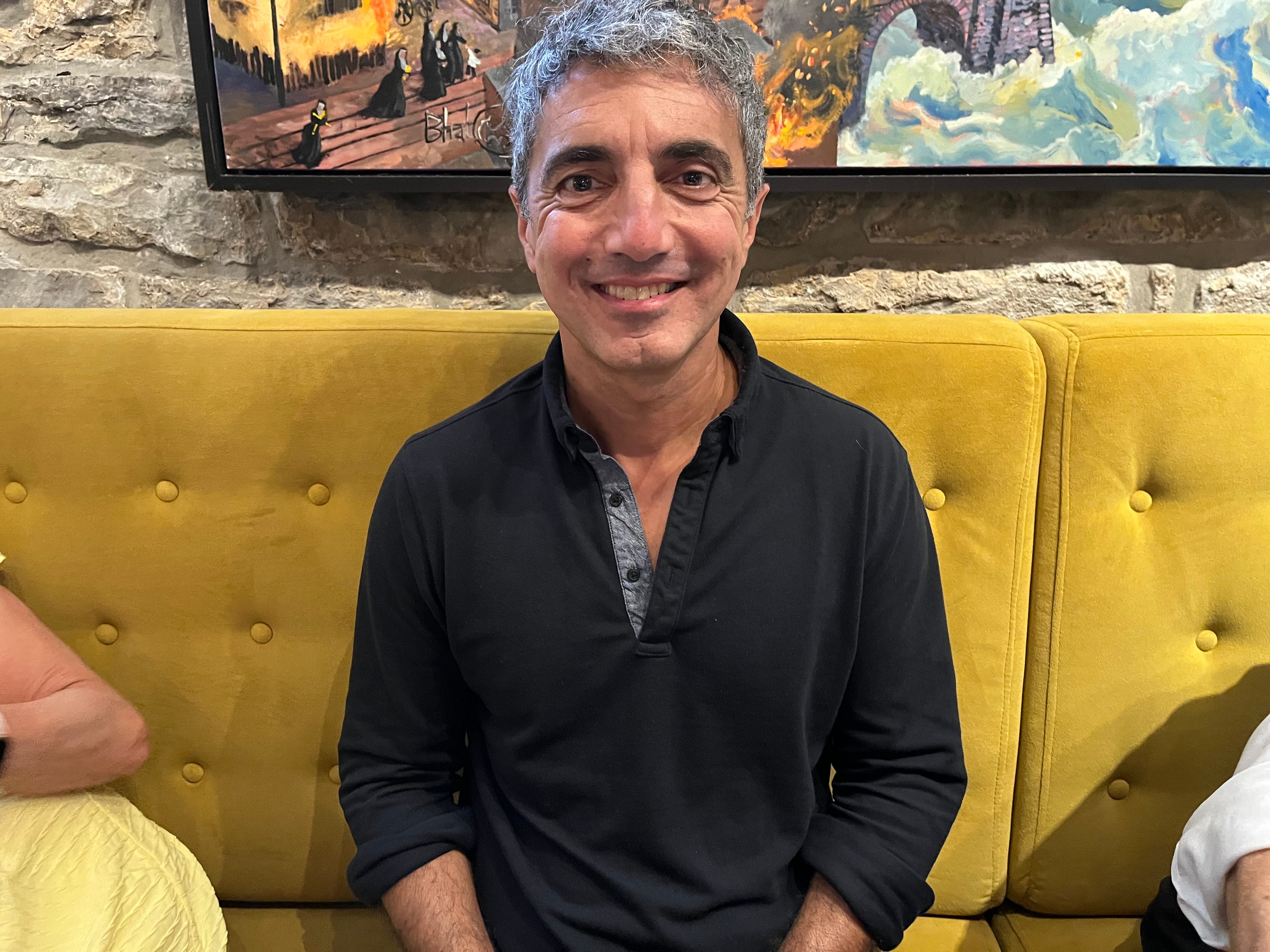
Image: Hussain Abdul Hussain in discussion with us at lunch after his presentation in Ottawa on August 25
Conversation of Casey Babb and Hussain Abdul-Hussain
Casey Babb began by talking about the guest speaker’s book. It is, he said, both personal and historical. He asked him to tell the listeners some of his personal story.
Childhood and Education
Hussain explained that he is a Shi’a Muslim. His mother is from Lebanon and his father is from Iraq. He spent his early years growing up in Iraq under the regime of Saddam Hussein. When Saddam Hussein launched an invasion of Iran following the takeover of Iran by the Islamic regime, Hussain’s father left Iraq and moved the family to his mother’s home in Lebanon.
In the 1980’s Lebanon was racked by civil war. Hussain experienced life as a refugee, the loss of property and displacement due to conflict. He mentioned that he tells his Palestinian friends that people throughout the region have had this experience, and moved on to build their future in other places. He says that Palestinians would be better off doing that than looking backward at what their parents and grandparents lost, and pursuing their campaign against Israel.
In Lebanon, Hussain grew up in Baalbek, and witnessed the rise of Hezbollah there. The region was once a third Christian, but today, after decades of Hezbollah control of the area, no Christians are left. He was raised as an observant Shi’a Muslim and was taught that Zionism was a relentlessly expansionist movement which aimed to rule all the land from the Nile to the Euphrates, and to kill or displace the people who lived there.
Moving to Beirut to attend University, he found himself in a more cosmopolitan environment. He met Druze, Sunnis and Christians. His beliefs shifted away from his traditional upbringing, and he became a Marxist-Leninist. He supported the campaign to liberate Palestine, and wore a keffiyeh.
Turning Point
Hussain said that the turning point in his own beliefs occurred in 2000. In that year Israel pulled out of the security zone that it had controlled for many years in Southern Lebanon.
Out of curiosity Hussain went south to the newly liberated area and approached the border which was marked only by a barbed wire fence. He was able to see Israelis going about their lives in the villages below.
Wanting to know more about Israelis, he learned Hebrew, which allowed him to listen to Israeli radio. He was surprised to hear Israelis talking about peace rather than conquest.
He became disillusioned with Hezbollah. Hezbollah had claimed that it’s goal was to liberate southern Lebanon, but even after the Israeli withdrawal, they did not lay down their arms. Prior to the 2000 Israeli withdrawal from Lebanon, Lebanese Prime Minister Rafic Hariri had implicitly promised Israel that no attacks will be launched from Lebanon if it withdrew. UN Secretary General Kofi Annan came and certified that Israel had completed it withdrawal.
Hariri tried to convince Hezbollah to surrender its arms since the Israeli occupation had ended. As we know, this never happened. Hezbollah killed Hariri, per a UN Tribunal, in 2005. Hussain said that as an activist he wanted to make things better, but realized that not all those who presented themselves as activists were trying to fix things.
He realized that people on the Lebanese side were lying. The border was not secure. Hezbollah took over the border region, not the Lebanese army. He saw that, far from trying to take the territory from the Nile to the Euphrates, Israel was willing to give up territory in return for promises of peace. But those promises were not kept. Seeing this, he changed his views about Israel.
Where are things headed?
Casey Babb asked the speaker where he thought things are headed with Lebanon and Hezbollah today. How will things look in five years?
Hussain said that the present Lebanese government is led by a man (President Aoun) who wants to make peace and wants to remove Hezbollah from the border region. But the government is worried that the relationship between the US and Iran may change. The US and Iran are enemies now, but the US administration has been trying hard to make a deal with the Iranians. If such an agreement were concluded, they worry that the US would sacrifice Lebanon’s interests in return for concessions from Iran.
There are historical reasons for these concerns Hussain explained that in 1958, in an attempt to improve relations with Egypt, President Eisenhour conceded Lebanon to then Egyptian President Nasser, who wanted to build a pan-Arab state. Similarly, in 1991 when Syria joined the American war against Iraq, the US acquiesced in the Syrian takeover of Lebanon. By 2008 Lebanon was controlled by Hezbollah. The US provided Lebanon with $100 million a year at the time to keep the Lebanese from causing them trouble.
Turning to the current situation, Hussain said that since the death of Hassan Nezrallah, many Lebanese have come out in favour of peace with Israel. In a poll conducted by an extreme right Syrian party which is no friend of Israel or the Jews, the results showed that 50% of Lebanese and 65% of non-Shia Lebanese favour peace. But Hezbollah doesn’t want peace and Lebanon is too weak to resist Hezbollah.
Do Canadian Arabs want Peace with Israel?
Casey Babb said that here in Canada we are not hearing from Arabs and Muslims who want peace with Israel. He asked who are these people that we are hearing from who take such a hostile line against Israel and why is it these people we hear from and not those who favour peace?
Hussain said that the politics in Lebanon are sectarian. People want to know what tribe you belong to, not about your views on economics. People are emotional about politics. They don’t think about interest rates of the cost of living.
He said he tells people, “Even if there was injustice in the past, think about the future, not the past.”
To illustrate his point, he talked about Palestinians in Dubai. There are 8 million expatriates in Dubai. They have no political rights. They are there to work and try to have a good life, not to struggle for political rights. A Palestinian who finds himself under Israeli rule, should take the same approach, in his view.
Palestinians need to build a better life. In order to do that, the first thing we all need is peace. This is the opposite of where Hamas wants to take the Palestinians.
Casey Babb returned to the subject of Islamic Extremism in Canada. He said that for a while extremism was rising but then it seemed to dip. Since October 7, 2023 it is on the rise again. He asked what is driving Islamic Extremism. What should governments do to fight it?
Hussain answered that the problem is not Islam itself. It is what we, as Muslims make of it. Islam as a personal spiritual belief is fine. Our society protects freedom of religion and that includes freedom to practice Islam.
It is political Islam that is the problem. He says his fight, our fight, is with political Islam, not Islam in itself. For example, in the US the Democratic Socialists are allied with political Islam. As socialists they don’t agree with what Islam stands for. In fact, Islam is capitalist. It advocates a flat tax of 2% on everyone, while Democratic socialists favour progressive taxes.
Political Islam comes out of the Muslim brotherhood. It’s slogan is “Islam is the solution”. These policies are not in line with the goals of its ostensible allies on the political left. He said that the success of Political Islam as well as communism is facilitated by the dumbing down of the electorate.
He also said that when you look at the manifestations of Islamic extremism such as the pro-Hamas encampments that took over many American University campuses, the muscle was coming not from young Muslims, but from white suburban kids.
Populism has encouraged the adoption of simplistic solutions to complex problems. Leaders who push populism are attractive to uninformed young people, increasing support for leaders like Sanders on the left and Trump on the right. Even Jewish kids are vulnerable.
Casey Babb asked about the role of the US administration has in trying to fix things in Lebanon. What stake do they have in an outcome that benefits the people of Lebanon and leads to peace with Israel?
Hussain said that the current administration is as good as it gets for Lebanon. The worry is that the American interest in improving things for Lebanon won’t last forever. There are people in the Trump administration who are against the current policy. The Lebanese know that small countries can be sacrificed by a great power for a bigger prize.
He said that the window of opportunity we have now will last three to six months. The Israelis and Lebanese are negotiating under US auspices.
The current President and Prime Minister of Lebanon want Hezbollah out of power and Israel to withdraw from southern Lebanon. Israel is willing to withdraw only if the border will be peaceful, which means that Hezbollah can’t fill the vacuum. The present experiment with test zones is meant to show that the Lebanese army can keep Hezbollah out of areas vacated by Israel. So far it is not working.
Audience Questions
How do we get our leaders to understand the Hussain’s message? What should we do?
Hussain said that we all need to make the case for liberal ideas, as opposed to populism. He commented on the self-defeating effects of affirmative action and the advantages of meritocracy.
He said that Lebanon is an example of affirmative action on steroids. Everything is divided up according to the ethnicity of the participants. As a result nobody is considered to have earned their position on merit. Everyone is seen as a member of a tribe rather than someone working for the common good.
“How can Islamic Extremism be defeated?”
Hussain said that liberty is number one. Liberal societies progress by evolution rather than revolution. They should focus on freedom and not on social and political arrangements among tribes.
Since the attacks on Israel of October 7 (by Hamas) and October 8 (by Hezbollah), there are worrisome new trends in Western society. What to do?
Hussain said that the far left, the far right, and Islamic extremism share a belief that government is broken and must be fixed. They don’t agree on how it should be fixed. Their common cause is in trying to undermine what exists.
This animosity toward the basic principles of western society is the new trend. It has to be resisted by standing up for moderation, compromise and supporting the underlying principles of a system based on freedom of thought.
The Arab Case for Israel
Hussain Abdul-Hussain is one of a growing group of outspoken Arab and Muslim Zionists. His book, “The Arab case for Israel”, pushes back against the extremist narrative that Israel is a calamity inflicted on the Arab and Muslim world and that Israel’s very existence is a crime against international law.
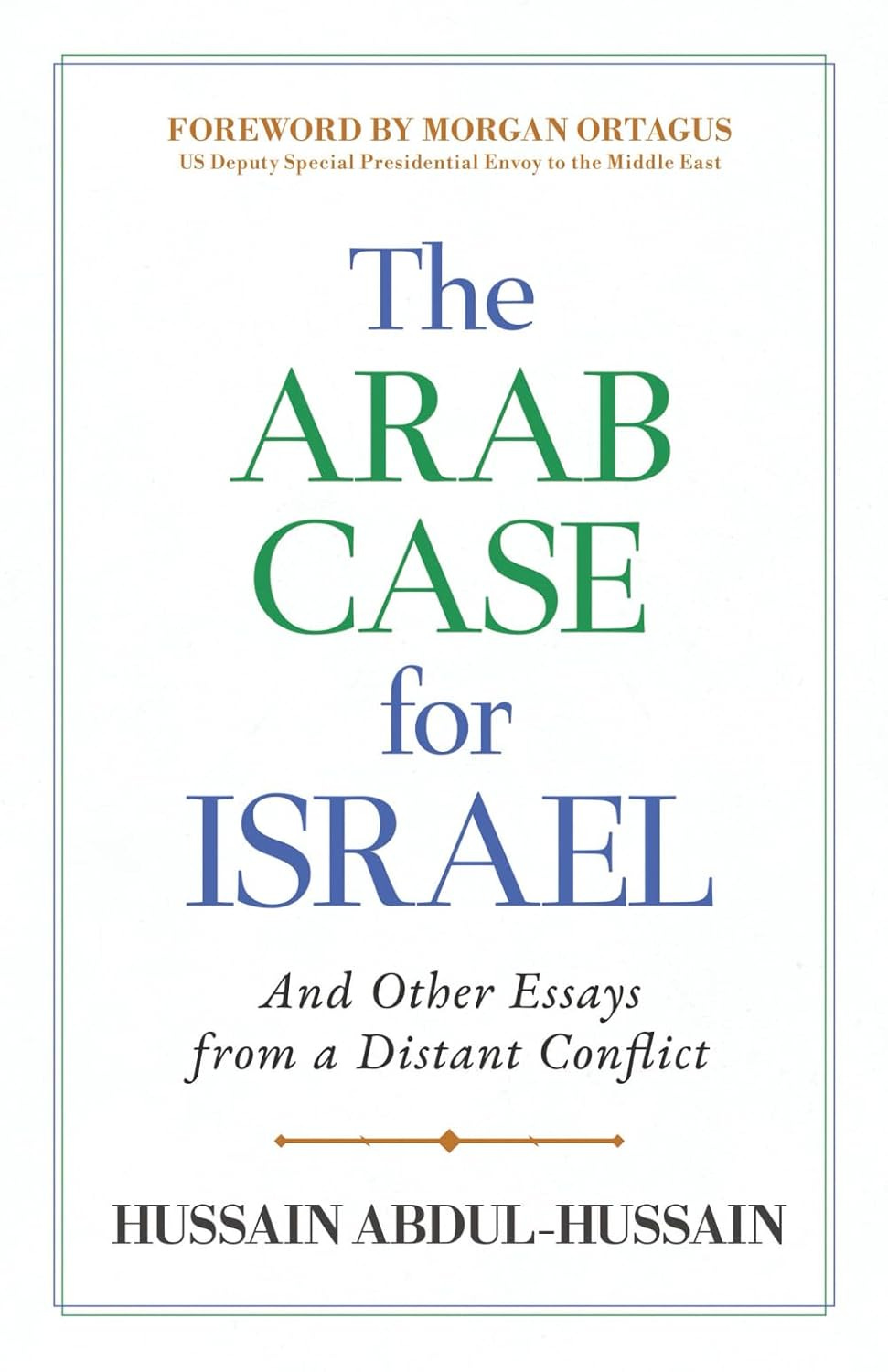
Image: Cover of Hussain Abdul-Hussain’s book, “The Arab Case for Israel” published in February 2026.
Hussain argues contrarily that Israel’s presence is good for the whole region and that peace with Israel is the best policy for Israel’s neighbours, including the Palestinians. I encourage readers to check it out.
Canadian Zionist Forum is Three Years Old
As this publication enters its fourth year, I am grateful to our founding and payed subscribers, including the original supporters on the annual plan, many of whom are now renewing for the fourth time. Your support, interest and loyalty means a lot to me. Thanks to everyone of you.
The Israeli election is appointing and there every day brings dramatic developments. Expect a new article about the campaign soon.
I am in the process of planning a trip Winnipeg to visit the controversial Naqba exhibition at the Canadian Museum of Human Rights. Dates for that trip will be finalized soon. If you enjoy reading our articles, please do consider upgrading to a paid subscription. Paid subscriptions help support the cost of travel to provide more coverage of issues affecting Canadian Jews and our connection to the state of Israel.
If you are already a paid subscriber you can leave a comment.
If you would rather make a one-time gift you can an buy me a coffee.

Canadian Zionist Forum sends best wishes and thanks to all our readers. We are very grateful for your interest and support. Please share this article with someone who might appreciate it.
Unfortunately Hussein is one in a million. Most indoctrinated Muslims Will never question their beliefs and their belief is that nothing matters more than destroying the Jewish state. Its a matter of honor. Meanwhile groups thar support and promote political Islam in the West like CAIR are fetted. Western governments in Canada and Europe (And maybe soon the US) grovel to political Islam. And Islamist states like Qatar Turkey and Pakistan spend billions influencing Western politics, universities and media. Its good that there is evidence that Muslim Zionism is possible. But Hussein is spitting into the Ocean.