

The campaign for Israel’s next general election is under way. There are just over 10 weeks left before voting day on October 27. A recent poll, published on August 12 by pollster Midgam, shows that Gadi Eisenkot’s new party, Yashar (Straight or Upright) continues to lead with a projected 23 seats, followed by Likud (led by Prime Minister Benjamin Netanyahu) with 21. The third place is held by Yachad (Together), led by former Prime Minister Naftali Bennett. Yachad is projected to win 12 seats. Fourth place in the Midgam poll is held by the Democrats, led by Yair Golan, with 11 seats, while fifth place goes to Avigdor Leiberman’s Yisrael Beiteinu (Israel is our Home) with 10. The previous article here at Canadian Zionist Forum, published on August 2, offered some history and background about the five largest parties and their leaders. You can read it by clicking on the image below.

No party is anywhere close to winning a majority of the seats. Winning the largest number of seats place in the election is still important, because the leader of the largest party usually gets the first chance to form a government. Whoever that is, forming a majority government will likely require the agreement of some of the smaller parties.
It takes 61 votes to ratify a government, which means that whoever gets the mandate to form a coalition will have to negotiate with and balance the demands of multiple factions in order to secure the necessary support. As has become the norm in recent Israeli elections, new factions have been formed for the latest vote, and potential mergers and alliances are in the news.
In this article we will look at the smaller factions that are vying for a place in the next Knesset and consider the implications of the projected election results for the formation of the next government.
Also Running
Leading the smaller parties, with 8 seats each in the August 12 poll, are United Torah Judaism (UTJ) and Otzma Yehudit (Jewish Power).
UTJ (United Torah Judaism
UTJ is part of the outgoing coalition. The leader is Yitzchak Goldknopf. UTJ is itself a coalition of two factions of Haredi (ultra-orthodox) Jews: Agudat Israel, representing Hasidic Jews, and Degel Hatorah, representing the Lithuanian haredim, also know as Mitnagdim. UTJ is an expressly non-Zionist party, based on their view that the return to Zion requires the messiah. It participates in Israeli elections and joins coalitions, but its leaders do not join the cabinet. In return for supporting governments, it obtains support for the interests and institutions of haredi Jews in Israel. Most of the haredim live apart, keeping separate from secular society. The haredim operate their own schools which are focused on religious studies, and promote a lifestyle for men in which Torah study is the most desirable occupation. The rabbinic leadership of the Haredi communities carries great authority, which is important at election time.

UTJ leader Yitzchak Goldknopf — Source: Times of Israel
In return for supporting Israeli government coalitions, the UTJ wins financial benefits from the government to subsidize their way of life. They also control the government agencies responsible for enforcing Kashrut and supervising family law, including marriage and divorce. Most ultra-orthodox men do not serve in the military.
When UTJ joined the government four years ago they extracted a promise from Benjamin Netanyahu that legislation formalizing the exemption of haredi youth from military service would be passed by the current Knesset. This promised legislation was repeatedly delayed over the past three years. The government has been unable to muster the votes to pass the exemption, while young Israelis from the rest of the population served long periods of reserve duty through more than two years of war. UTJ periodically threatened to bring down the government over the issue, but they never did it.
Just before the Knesset adjourned, a stop gap measure was passed. The legislation delayed any enforcement of the draft law against Haredi men who have failed to report for duty after being issued draft notices. This measure is unlikely to be acceptable to the Supreme Court, which ruled many years ago that the prevailing practice of exempting most young Haredi men is discriminatory, and must be changed. In June of 2024, the Supreme Court ruled that conscription of Haredi men must begin. In response to actions by the IDF to comply with this court ruling, there have been large protests by members of the Haredi community against any efforts to enforce the draft.
The issue of exemption from military service for young men who study Torah has bedeviled the State of Israel from its earliest years. For an overview of the history, check out Haredi conscription in Israel - Wikipedia.
Otzma Yehudit (Jewish Power)
Also sitting at 8 seats is Otzma Yehudit. This is a party of the extreme right, which was part of the outgoing government. Otzma Yehudit is led by Itamar Ben Gvir, who serves as Police Minister. Otzma Yehudit believes Israel should retain sovereignty over all the territory west of the Jordan. They oppose a Palestinian state and have advocated the expulsion of people who are disloyal to the State of Israel.

Image: Otzma Yehudit leader Itamar Ben Gvir — Source: Washington Post
Ben Gvir was once a member of Kach, the party founded in the 1990’s by Rabbi Meir Kahane. Kach advocated the removal of all Arabs from Israel. It was banned by the Knesset, and Kahane was expelled from his seat at the time. Ben Gvir now says that his support for blanket expulsion of Arabs was wrong and he no longer holds that view.
During Ben Gvir’s tenure as Minister of National Security, he has presided over a sharp increase in violent crime in Arab Israeli towns. He has also been blamed for the failure by the border police to protect Arabs n Judaea and Samaria who are being attacked by Jewish hooligans who want to take their land. This has been harmful to Israel’s international reputation. Incidents of violence by Jews against Arabs in Judaea and Samaria are covered regularly on Canadian national news programs. Remarks by Ben Gvir were cited in the case brought against Israel st the International Court of Justice (IJC) alleging genocide was being committed in Gaza. The court declined to issue an injunction against Israel at the time and has not yet ruled on the merits of the case.
Ben Gvir has criticized the current government, of which he is a part, for establishing ceasefire agreements with the enemy in Gaza and Lebanon, and for allowing humanitarian aid into Gaza during the war. Otzma Yehudit quit the government in January of 2025 to protest the US sponsored Gaza ceasefire agreement, but returned in March, saying that the party would not support a permanent ceasefire.
Otzma has clashed with the Haredi parties over the issue of haredi military service, compaining that religious zionists have borne a disproportionate share of the burden as a result of over two years of war, but they fell into line and voted to defer enforcement of draft laws against them just before the Knesset adjourned.
While the party was on the fringes of Israeli politics before 2021, an electoral agreement with Likud brought them into the mainstream in that year. In the last election, Otzma elected 6 members. The Midgam poll puts their current support at 8 seats.
Shas (Sephardic Guardians)
The latest poll shows that Shas would win 7 seats. Their leader is Aryeh Deri. Shas is a Haredi party which draws support primarily from Sephardi and Mizarachi Jews.
The party was founded in 1984, by Rabbi Ovadia Yoseph, the former Sephardi Chief Rabbi of Israel. The original goals of the party were to increase the representation of Sephardi Jews in the Israeli government and to promote greater religious observance among its supporters.
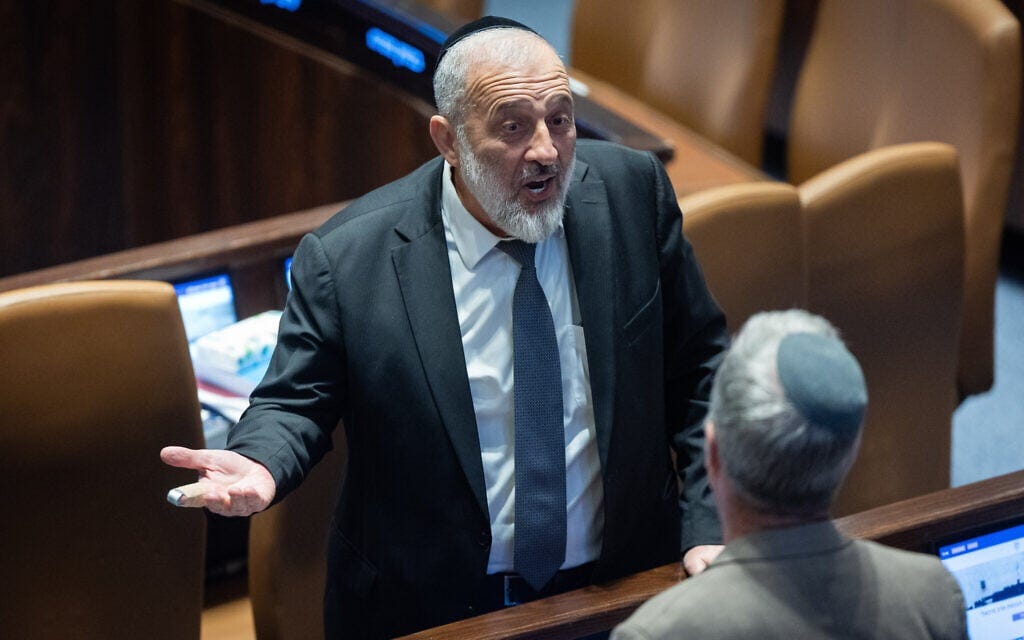
Shas leader Arye Deri — Source: Times of Israel
Like UTJ, Shas was originally non-Zionist, but it joined the World Zionist Organization in 2010, and since then its members have served in cabinet. Shas has supported governments of the center left and of the right. The party originally took a moderate stance on matters of war and peace after founder Ovadia Yosef said that lives were more important than territory. Since the collapse of the Oslo peace process, the party has taken a harder line, culminating in its support of the current right wing government.
Shas leaders are socially conservative. They have made statements opposing the public expression of homosexuality. The party leadership has also faced legal difficulties over allegations of corruption. An anti-establishment current among party supporters led to resentment of these charges, which are perceived to be unfair. When party leader Aryeh Deri was convicted of corruption in 1999, the party drew a large sympathy vote in the subsequent election, winning 17 seats, its best showing ever.
Like UTJ Shas are opposed to the conscription of young Haredi men and pressured the outgoing government of which they are a part, to pass the Haredi draft exemption. They faced a campaign in the mid-teens from haredi women critical of the all male Knesset list, but the current 11 member Shas delegation still contains only men.
Latest polls show that Shas would win 7 seats if an election were held today.
Hadash-Ta’al
Hadash-Ta’al is an alliance of Hadash (Israeli communist party) led by Ayman Odeh and Ta’al (Arab Movement for Renewal), an Arab nationalist party led by Ahmed Tibi. Both parties are opposed to Zionism and draw most of their votes from Arab citizens of Israel. Neither party has ever joined an Israeli government.
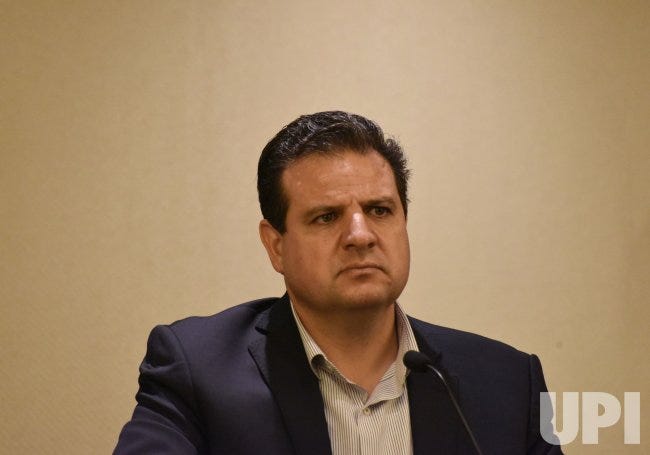
Hadash Ta’al leader Ayman Odeh — Source: UPI
During the war that began October 7, 2023, they have been accused by some members of the government of supporting the enemy. Hadash member, Ofer Cassif, was suspended from the Knesset for six months after he signed a petition supporting the genocide case against Israel at the IJC.
Latest polls give Hadash-Ta’al six seats, one more than in the previous Knesset.
Ra’am (United Arab List)
Ra’m is a primarily Arab party which draws its support mainly from the Bedouin communities in Southern Israel. Officially affiliated with the Muslim brotherhood, the party has nevertheless pursued a pragmatic policy in recent years under the leadership of Mansour Abbas.
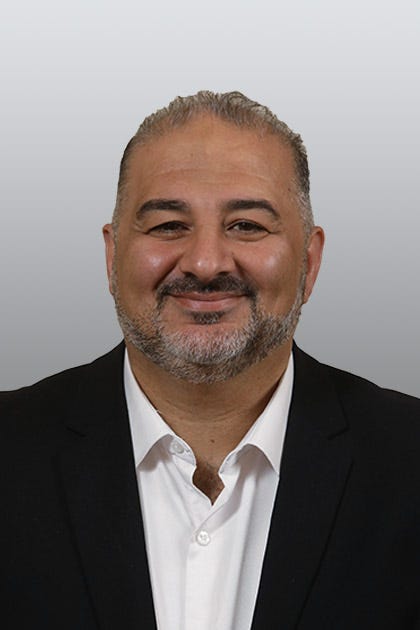
Ra’am Leader Mansour Abbas — Source: IH
As noted in the previous article in this series, Abbas joined the 2021 coalition government led by Naftali Bennett. That government tried to address issues of policing and infrastructure in Arab communities. While Bennett (now leading the third-place Yachad allience) has said that in the wake of October 7, he would no longer support an Arab party in government, the electoral math suggests that a coalition excluding Likud, the extreme right and the Haredim cannot be formed without Ra’am.
There have been reports in recent weeks that Abbas is negotiating to bring a Jewish MK, Yoav Segalovitz into his list. Segalovitz recently left Yesh Atid (now part of Yachad). Stories about the negotiations say that Segalovitz would get the second slot on the Ra’am list, just below Mansour Abbas. Segalovitz has that he would only do this if Ra’am would formally endorse the idea of Israel as a Jewish state. This would make Ra’am an Arab Zionist party and would presumably make it more acceptable as part of the next government.
Ra’am has 5 seats in the outgoing Knesset and the polls indicate that it would again have five if an election were held today.
Relgious Zionist Party
Also polling at 5 seats is the Religious Zionist party, led by Betzaled Smotrich. RZP is part of the outgoing government. The party was known as Tkumah (resurrection) before 2021. It is a far right religious party, which ran in alliance with Otzma Yehudit in the last election.
Tkumah split from the National Religious Party (NRP) in 1998. The founders left due to their opposition to the NRP’s support of the Wye River Memorandum which called for the transfer of additional territory to the Palestinian Authority. Tkumah ran in the 1998 election as part of the National Union, an electoral alliance of right wing parties. The party ended up with one seat, sitting in opposition to the government of Ehud Barak, which implemented the Wye River Memorandum.
In 2003, Tkumah ran again as part of the National Union and gained two seats. It joined the government led by Ariel Sharon. The party was expelled from that government in 2006, when it opposed Sharon’s decision to withdraw from Gaza.
In 2008, Tkumah joined with other factions to form the Jewish Home party, which was then led by Naftali Bennett. The decision split Tkumah, and the dissenting half joined a reformed National Union in the following election and again won two seats.
In 2013, National Union split, with all factions except Tkuma forming the Otzma Yehudit party. Tkuma then ran as part of Jewish Home, which did well that year winning twelve seats. Four of these went to Tkuma In 2015, Jewish home declined to 8 seats, leaving Tkuma with two.
In 2019 Betzalel Smotrich became leader. Tkumah ran in April of 2019 in an alliance with Jewish Home and Otzma Yehudit. In the April 2019 vote, the three parties together won 5 seats, with 2 going to Tkumah. In the second 2019 election, the party ran as part of Yamina, led by Naftali Bennett. When Bennett left the Netanyahu government formed that year in alliance with Blue and White, Tkumah left Yamina.
In 2021, Tkumah was renamed the Religious Zionist Party. It ran with on a list with Otzma Yehudit. The joint far right list secured six seats, with four going to RZP. When the Bennett-Lapid government fell in 2022, RZP again ran with Otzma. The two factions together won 14 seats, including 7 for RZP, marking a high water mark for Smotrich and his right wing religious faction.

Religious Zionist leader Betzalel Smotrich — Source: Jerusalem Post
Betzalel Smotrich served as Finance Minister in the outgoing government. It also got a minister within the Ministry of Defense with responsibility for Jewish settlement under COGAT, the Israeli military government in the territories. The chairmanship of the Knesset Law and Justice committee was given to RZP member Simchah Rothman. Under his leadership the committee was involved in the government’s ongoing confrontation with the Supreme Court.
As recently as April RZP was polling below the threshold which would give it seats in the upcoming Knesset, but in recent polls it is projected to win 5 seats.
Zionist Home — The Reservists
In the latest Midgam poll this new party, formed in July of 2026 is projected to win 4 seats, although other recent polls show it falling below the threshold to enter the Knesset.
Founded as “The Reservists” by Hili Toppel and Yaakov Hendel, the two leaders the first and second slots in the party’s list for the upcoming election.
The focus of Zionist Home is on the interests of Israelis serving in the military, and in particular on opposition to a broad exemption from conscription for Haredim. Describing themselves as centre to centre-right, the party advocates a broad Zionist government that would exclude the Haredi parties as well as the Arab parties.
It is notable that recent polls that show Zionist Home below the threshold give 25 seats to Yashar while the Midgam poll that shows them getting in, gives Yashar 23. The same effect is seen on the numbers for Likud, which gets 21 in the Midgam poll, but 23 in other recent surveys.
Putting the Pieces Together
The August 12 Midgam poll gives parties that were part of the outgoing government a total of 49 seats. This would represent a drop of 15 from the previous result. Parties of the Zionist opposition, including Yashar, Yachad, Yisrael Beiteinu and the Democrats, would receive 56 between them.
The remaining 15 seats would be divided among Hadash-Ta’al at 6, Ra’am at 5 and Zionist Home at 4.
With 61 seats required for a majority, a Likud led government would have lure one of the two large opposition parties into its camp to hold on to power. Netanyahu has done this in the past, forming a government in 2019 with Blue and White, a centrist party led by former IDF Chief of Staff Benny Gantz. Gantz had said during the election that he would not form a government with Netanyahu.
The Netanyahu-Gantz coalition agreement was enshrined in legislation and was supposed to guarantee a rotation of the job of PM from Netanyahu to Gantz after two years. Instead Netanyahu used a loophole and forced a new election after two years. Gantz never got his turn at the office of Prime Minister. (Blue and White is running below the threshold in the current polls.)
With all four of the opposition parties declaring that they won’t join a Netanyahu government, and Gadi Eisenkot’s Yashar leading in the polls, it seems likely that Yashar will get the first chance to form a government, if the results turn out as predicted in the Midgam poll.
If Eisenkot can enlist the support of the other four opposition parties, he would still need another five seats to achieve a majority. As noted above, Bennett, leader of Yachad, is on record against forming another government which relies on Ra’am. However, Bennett is also opposed to aligning with the Haredim, which leaves few options.
The other possible component of a centrist government led by Eisenkot would be Zionist Home, should they get in. But Zionist Home says they want a broad Zionist government that would include Likud and wouldn’t include Ra’am.
If Ra’am modifies its policies to meet the demands of Segalovitz, it would meet Eisenkot’s stated condition that members of his government support Israel as a Jewish state. Bennett would then have to decide whether to join a government which included this modified Ra’am. If he does, a 61 seat majority would be possible. In such a case, Zionist Home would have to decide whether to come in and boost the government from 61 to 65 seats or join the opposition.
As we’ve seen, a 61 seat majority is hard to maintain for a four year term. Ra’am may not come to an agreement with Segalovitz, which would make it harder for Eisenkot to get to 61 seats. The upshot is that even with a significant shift of the Israeli electorate away from the parties of the outgoing government, their is no easy path to a majority for the opposition.
Scenarios without Zionist home currently give the government parties one or two more seats, which means that the math in a Knesset without Zionist Home is not necessarily any easier for the opposition. The polls will most likely continue to shift as the election gets closer. The electorate continues to react to events in Lebanon and Gaza, as well as the Persian Gulf.
Look for more coverage of the Israeli election here at Canadian Zionist Forum as the date gets closer.
As this publication enters its fourth year, I’d like to take the opportunity to express my gratitude to our payed subscribers, including the original supporters on the annual plan, who are now renewing for the fourth time. Your interest and loyalty means a lot to me. I promise to continue providing value for the hard-earned money you choose to send our way.
I am in the process of planning a trip Winnipeg to visit the controversial Naqba exhibition at the Canadian Museum of Human Rights. Dates for that trip will be finalized in the fall. If you enjoy reading our articles, please do consider upgrading to a paid subscription to help support more coverage of the issues affecting Canadian Jews and our connection to the state of Israel.
If you are a paid subscriber you can leave a comment.
If you would rather make a one-time gift you can an buy me a coffee.

Canadian Zionist Forum sends best wishes and thanks to all our readers. We are very grateful for your interest and support. Please share this article with someone who might appreciate it.
That was a very helpful presentation. It reminds me of a game of chess - it's all about strategy and considering the options of your opponent. Every subsequent move requires a reworking the strategy. The outcome can only be reasonably guessed at, using the Polls.